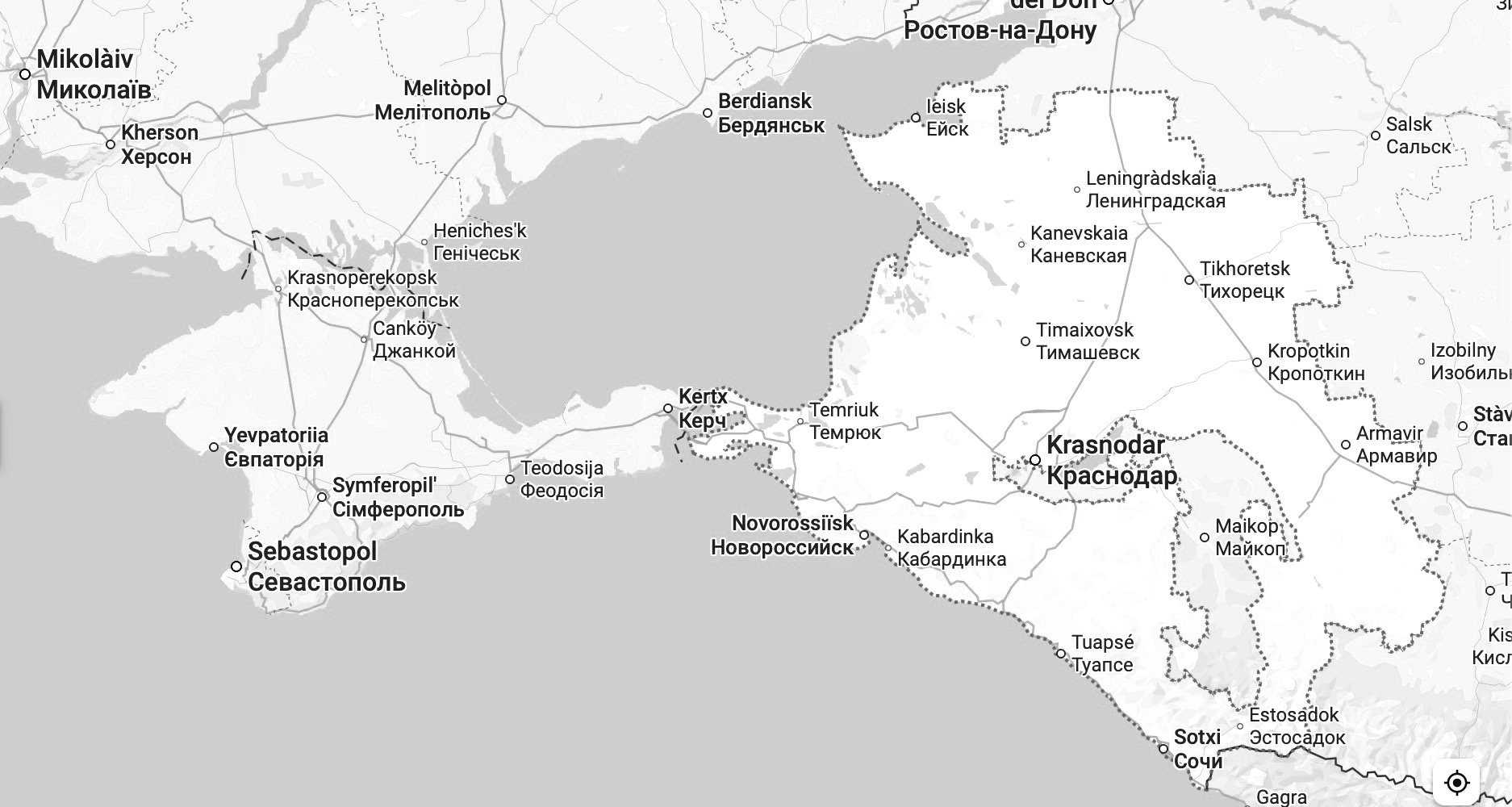
Intelligence Assessment: Degradation of Crimean air-defence radar network and the subsequent surge in Ukrainian strikes on Krasnodar Krai
1/25

The Crimean Peninsula is a place of strategic interest for both Ukraine and Russia. Its control is the reason behind the 2014 invasion and, subsequently, the attempt to occupy and subjugate Ukraine through a full-scale invasion in 2022. Several patterns were identified via collected data from 2024 and 2025, strongly suggesting a systematic campaign targeting radars located on the Russian-occupied Crimean Peninsula.
It is worth noting that these radars are critical for early warning against drones and surface drones, as well as missiles aimed at the Russian-occupied peninsula and other places located in the southern axis. At this point, any attack against targets located in Krasnodar Krai must bypass the occupied peninsula. We should keep in mind that Krasnodar Krai ports serves as a gathering point for an important portion of the Russian Black Sea fleet and for other targets of strategic value. Our ongoing research on the Crimea attacks shows that the number of radars destroyed increased in 2025, while changes in the number of air-defence batteries destroyed remained relatively stable.
Raw filtered data shows that the current campaign targeting radars on the Crimean Peninsula started last January and intensified from spring through summer 2025. Our open-source analysis clearly demonstrates that these attacks strongly correlate with subsequent attacks on Krasnodar Krai. Since the spring of 2025, verified attacks surged one month later after successful attacks on radar and air-defence systems located in Crimea.
The progressive downgrading of Russian interception capabilities (radars and air-defence batteries) on Crimea – which has escalated since spring 2025– opened the door for future attacks on Krasnodar Krai. Current trends suggest that the Russian Black Sea Fleet are now highly vulnerable to further Ukrainian attacks. For this reason, updates in Novorossiysk must be closely monitored for a correct evaluation of drone attacks, surface drone attacks, and missile attacks against strategic targets.
Key Judgements
· OSINT analysis shows that the number of air-defence systems destroyed in occupied Crimea was similar between 2024 and 2025, with a marginal increase from 23 to 29 of these destroyed systems. The current research reveals the quantity of radars (22) and air-defence systems (23) destroyed in 2024 was similar. The same evidence from 2025 suggested a Ukrainian campaign against radars located on the peninsula.
· OSINT analysis indicates that the number of radars destroyed in the Crimean Peninsula increased significantly between 2024 and 2025, from 22 to 96 destroyed radars in the occupied territory.
· The number of confirmed missile attacks in Krasnodar Krai increased from 4 to 15 between 2024 and 2025. During the same analysed period the number of confirmed drones and surface drone attacks doubled from 44 to 93.
· The comparison between attacks against radars and air-defence systems located in Crimea and drone attacks and strikes in Krasnodar Krai is correlational. The cumulative number of confirmed attacks showed that the number of attacks in Krasnodar Krai increased after a rise in the verified destruction of radars and batteries in occupied Crimea.
· The number of destroyed assets in Crimea increased from the beginning of 2025. Filtered intelligence suggested the destruction of radars and batteries in Crimea is paving the way for more attacks in Krasnodar Krai.
Assessment
Gathered and analysed data from 2024 and 2025 suggested that the Ukrainian Armed Forces are carrying out a focused campaign against radars located in Crimea. Tailored raw data confirmed this hypothesis after analysing the air-defence batteries destroyed in the occupied peninsula during both years. The total number of destroyed radars is sharply increasing in the southern axis; this has enabled a rise in drone attacks and strikes in Krasnodar Krai. At the same time, the number of destroyed air-defence batteries has remained largely stable.
It is almost certain that the ongoing campaign focused on Crimea will continue because the downgrading of Russia’s capabilities has paved the way for last year’s attacks in Krasnodar Krai. At this point, the destruction of these radars is almost mandatory for successful drone and surface drone attacks, as well as for missile strikes. Radars are key to intercepting all of them.
An important portion of the Russian Black Sea Fleet is currently harboured at Novorossiysk port after leaving Crimean ports. The current degradation of interception capabilities (i.e. radars and air-defence batteries) in the occupied peninsula is placing the Russian Black Sea Fleet in a highly vulnerable position.
Forecast
Current trends suggest that it’s almost certain that drone attacks against radars and air-defence batteries will continue in the near future, both in Crimea and in the Krasnodar Krai. At this point, a focused analysis of Novorossiysk and its surrounding area will be required.
It’s almost certain that Ukraine will carry out attacks on Novorossiysk, mainly against the port and the CPC (the Caspian Pipeline Consortium) facilities. It’s highly likely that the ongoing non-stop campaign against Russian radars located in Crimea will open the door for attacks on the Russian Black Sea Fleet in Novorossiysk. We should keep in mind that this area is more heavily protected than the CPC port infrastructure.